Is it entirely possible to inherit wounds or trauma? Is it possible that our current maladaptive coping mechanisms are a result of transgenerational trauma?
In life, we inherit a variety of things from preceding generations, be it their values, achievements, culture, language, art, or philosophical and religious worldviews. Individually, we also inherit dimples, curly hair, and unique facial structures. Sometimes, I look at my grandparents, and I see myself in them in many different ways.
In a similar fashion, we inherit negative traits from previous generations, including genetic vulnerabilities that predispose us to physical diseases like diabetes, or mental health conditions such as depression. We can also absorb generational trauma from insecure parenting styles, which are often influenced by:
- Unresolved emotional pain,
- Abandonment
- Violence
- Extreme stress.
Sometimes, this inherited burden is subconscious or unconscious, manifesting as a scarcity mindset, rage, shame, or guilt. In most cases, we are not even aware of these inherited wounds, yet they actively influence our thoughts, feelings, and behavioural choices.
Is there a set behavioural pattern that you have observed in your family? Be it substance abuse, a scarcity mindset, depressive episodes among relatives, or violent tendencies? Pause and ask yourself: Do these prevalent patterns influence how you behave or live your life?
These introspective questions allow you to become aware of the baggage that exists and prompt you to reevaluate your life. Looking keenly at my family, I can detect unresolved emotional pain, which, by itself, pushed me to pursue a career in counselling. Awareness is a driver for emancipating myself from these generational wounds within the family.
I believe you have heard or read about the World Wars, the Jewish Holocaust, the African slave trade, or, the struggle for independence in different African states. These global, regional, and cultural catastrophes caused deep physical, biological, and psychological wounds whose effects can be transferred from one generation to the next.
Research among atomic bomb survivors shows that leukaemia rates rose rapidly within the first decade after exposure, while other cancers, such as breast, and liver cancer, remained elevated over a lifetime. In addition, many people across subsequent generations continue to experience post-traumatic stress, anxiety, and depression linked to the loss of family and community. Not to mention the social stigma that accompanies these vulnerabilities, as some individuals have been rejected by potential suitors because of fears about the possibility of inherited illness.
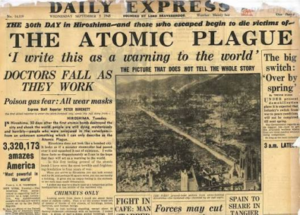
Front page of London’s Daily Express, September 5, 1945, featuring Burchett’s reporting.
Folklore and mythology also contain rich material about the archetypes of inherited wounds and generational curses. It seems that the intergenerational inheritance of wounds is a common theme throughout human history.
One myth that stands out is that of The House of Atreus, a famous royal family in Greek mythology cursed to destroy itself through generations of revenge. It started with Tantalus, who angered the gods by feeding them his own son, Pelops. The gods brought Pelops back to life, but Pelops later betrayed and killed a man named Myrtilus, who cursed Pelops’ entire family with his dying breath.
This curse drove Pelops’ sons, Atreus and Thyestes, into a bitter war for the throne. In a horrific act of revenge, Atreus killed Thyestes’ children and secretly served them to him at dinner. The violence continued into the next generation with Atreus’ son, Agamemnon. To win the Trojan War, Agamemnon sacrificed his own daughter, Iphigenia. In revenge for this murder, his wife, Clytemnestra, killed Agamemnon when he returned from the war. Finally, their son Orestes avenged his father by killing his own mother. Hunted by spirits of vengeance for this crime, Orestes was put on trial by the goddess Athena, who forgave him and finally broke the curse.
This mythos highlights the effects of inherited intergenerational wounds and how they impact future generations in all dimensions of life. In some cases, as we have seen, these patterns exist outside the awareness of the parties involved. However, with awareness, the patterns can be halted. A key theme that emerges is the role of forgiveness in addressing these intergenerational wounds. This highlights the importance of acknowledging what happened and understanding that these traumas are outside your control, while change is within your control.
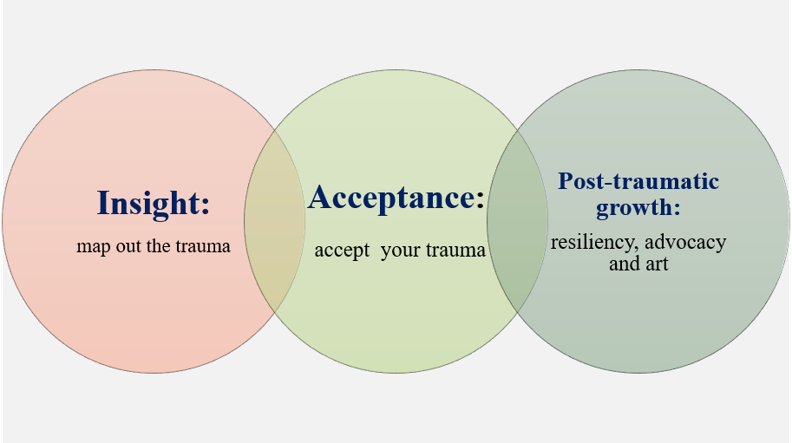
Healing isn’t possible without insight, but insight alone is not enough; one needs to take action.
To break the cycle of inherited wounds, you need to take on the burden of being the generation that consciously chooses a different path. This requires a commitment to growth and recovery, which can be achieved through:
- Post-Traumatic Growth: Inherited pain can be channelled into advocacy against such atrocities. This could mean advocating for the eradication of poverty, racism, gender-based violence, the use of nuclear weapons, climate injustice, discrimination, and any other wound you have identified. Equally, the pain can be sublimated into art, creating works that express pain and resilience.
- Protective factors: such as secure relationships, emotional literacy to understand healthy ways of emotional expression, and supportive communities, can play an important role in interrupting the transmission.
- Therapy: Individuals and families can seek therapeutic assistance to map out these wounds, learn adaptive coping mechanisms, and receive support from therapists to heal and recover. .
With support from Healing Aura, you can unlearn trauma-related patterns and recover. Our therapists provide personalized guidance to help you learn and develop healthier habits.
REFERENCES
American Experience. (2026, January 9). How the press reported on the atomic bomb. PBS. https://www.pbs.org/wgbh/americanexperience/features/how-press-reported-atomic-bomb/
Kamiya, K., Sakata, R., & Rajaraman, P. (2025). Eight decades of research on the long-term health effects of radiation in atomic bomb survivors and their offspring. Carcinogenesis, 46(3), https://pmc.ncbi.nlm.nih.gov/articles/PMC12558143/
Kirby, J. Story of the House of Atreus (Tantalos to Agamemnon). University of Miami. https://web.as.miami.edu/personal/corax/agamemnonbackstory.html