

Traumatic experiences can have both short-term and long-lasting consequences for an individual. Adverse childhood experiences and other traumatic experiences can affect how an individual processes and interprets reality. These experiences may include:
- Physical, emotional, and sexual abuse, e.g., rape and molestation.
- Physical and emotional neglect.
These experiences can alter the functioning of the nervous system, particularly the brain, making it more hypersensitive and hypervigilant and potentially leading to the misinterpretation of neutral experiences. Research show that intentional harm, e.g., abuse, carries twice the risk for long-term trauma compared to non-intentional events, e.g., accidents. Incidents involving interpersonal violence are more likely to produce post-traumatic stress disorder (PTSD).
In many cases, trauma is not simply the traumatic experience itself; rather, it refers to the lasting psychological, emotional, and neurobiological effects of the experience. Chronic distress and trauma can alter brain functioning and influence how we perceive, process, and interpret our experiences. These changes can involve maladaptive neuroplasticity, whereby the brain adapts to persistent stress or threat in ways that may become counterproductive.
These trauma-related changes may involve several interconnected brain systems:
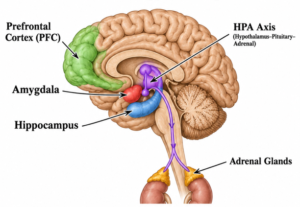
1 Amygdala
The amygdala is an important part of the brain’s threat-detection and emotional-processing system. It helps detect potential danger and initiate responses to perceived threats.
Trauma can increase amygdala reactivity and sensitivity to potential threats, leading to:
- Constant hypervigilance.
- Heightened fear and anxiety.
- Increased activation of the fight-or-flight response, which, when chronically activated, may contribute to physiological stress and cardiovascular strain.
2 Hippocampus
The hippocampus plays an important role in learning, memory, and contextual processing. It helps the brain distinguish between past experiences and present circumstances. Trauma and chronic stress can affect hippocampal functioning and, in some individuals, have been associated with changes in hippocampal volume.
These alterations may contribute to:
- Recurrent or distressing memories of traumatic experiences.
- Intrusive thoughts and memories that contribute to psychological distress.
- Difficulty placing traumatic memories in their appropriate context.
- Difficulties regulating emotional responses associated with traumatic memories.
3 Prefrontal Cortex (PFC)
The prefrontal cortex (behind the forehead) is involved in executive functioning, self-regulation, decision-making, attention, and emotional regulation. Trauma can disrupt prefrontal functioning, potentially resulting in:
- Poorer emotional regulation.
- Reduced impulse control.
- Difficulty shifting attention away from negative thoughts.
- Difficulty regulating repetitive negative thinking, including rumination, which is associated with depression and anxiety.
4 HPA Axis
The hypothalamic–pituitary–adrenal (HPA) axis is a major system involved in the body’s response to stress. It regulates the release of cortisol, a hormone that helps the body respond to stress. Chronic stress and trauma can dysregulate the HPA axis, resulting in:
- Persistent or altered stress responses and changes in cortisol regulation.
- Emotional exhaustion, where an individual may feel mentally and emotionally depleted even after adequate physical rest.
- Increased vulnerability to anxiety, PTSD and depression.
Treatment and Management
1. Pharmacotherapy
Antidepressants, including selective serotonin reuptake inhibitors (SSRIs), may be used to reduce symptoms associated with PTSD, anxiety, and depression. Medication should be prescribed by a psychiatrist.
2. Trauma-Focused Psychotherapies
Research supports trauma-focused psychotherapies as important treatments for PTSD and trauma-related symptoms. These may include:
- Prolonged Exposure (PE): Involves gradually approaching trauma-related memories, feelings, and situations in a safe and structured manner to reduce avoidance and help the individual process the traumatic experience.
- Cognitive Behavioural Therapy (CBT): Helps address unhelpful thoughts, beliefs, and behavioural patterns. Cognitive restructuring can be used to challenge distorted interpretations and reduce maladaptive patterns of thinking, including rumination.
- Eye Movement Desensitization and Reprocessing (EMDR): Uses bilateral stimulation, such as side-to-side eye movements, while the individual processes traumatic memories. It aims to reduce the distress associated trauma memories.
- Support groups: Can provide social connection, shared experiences, and emotional support during trauma recovery.
The brain can change in response to trauma, but neuroplasticity also means that the brain can change through recovery. With appropriate treatment and support trauma-related patterns can become less dominant and healthier patterns of responding can be developed.
With support from Healing Aura, you can unlearn trauma-related patterns and recover. Our therapists provide personalized guidance to help you learn and develop healthier habits.
REFERENCES
Bremner, J. D. (2006). Traumatic stress: Effects on the brain. Dialogues in Clinical Neuroscience, 8(4), 445–461. https://doi.org/10.31887/DCNS.2006.8.4/jbremner
Schrader, C., & Ross, A. (2021). A review of PTSD and current treatment strategies. Missouri Medicine, 118(6), 546–551. https://pmc.ncbi.nlm.nih.gov/articles/PMC8672952/
Schwartzkopff, L., Gutermann, J., Steil, R., & Müller-Engelmann, M. (2021). Which trauma treatment suits me? Identification of patients’ treatment preferences for posttraumatic stress disorder (PTSD). Frontiers in Psychology, 12, Article 694038. doi:10.3389/fpsyg.2021.694038
Wilson, C., Kern, J., O’Neill, K., Seamon, M., & Kaufman, E. (2026). Intentions matter: Long-term patient outcomes after intentional, interpersonal injury. Journal of Surgical Research, 317, 453–460. https://doi.org/10.1016/j.jss.2025.11.063